
The India vs New Zealand ODI series continues with another exciting contest as both teams prepare for the third match at Seddon Park, Hamilton. With experienced international players available on both sides, the upcoming encounter offers plenty of opportunities for interesting batting performances, bowling spells and team records.
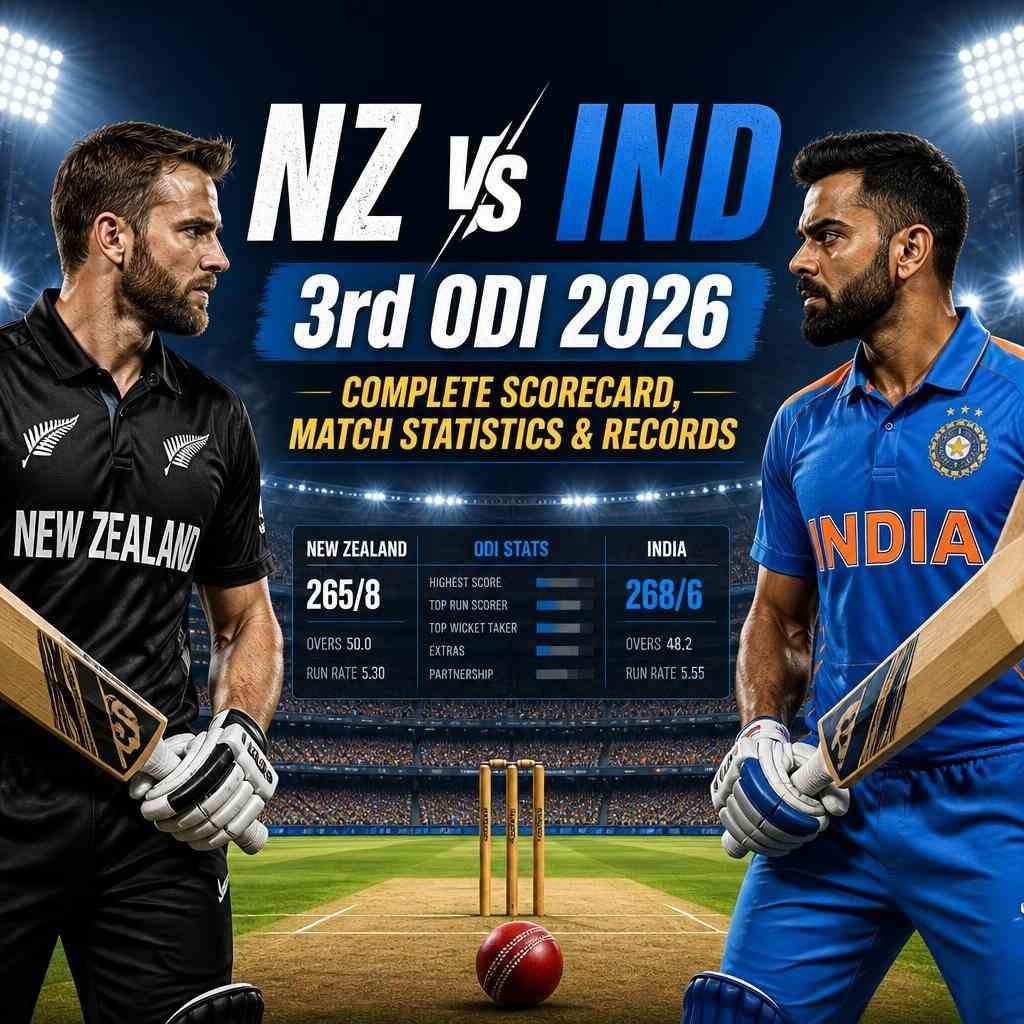
The NZ vs IND 3rd ODI 2026 is scheduled for 10 November 2026. Cricket followers will have several things to watch throughout the 50-over contest, including individual scores, team run rates, batting partnerships and bowling performances.
However, following an ODI match involves much more than checking which team scores the most runs. Understanding scorecards and match statistics can help readers get a clearer picture of how the game develops.
In this detailed guide, SaffronExch explores the important statistics, cricket terms, scorecard details and performance indicators that fans should understand while following India vs New Zealand.
NZ vs IND 3rd ODI 2026: Complete Match Schedule
Before exploring the cricket statistics, let’s look at the important information about the upcoming match.
| Match Information | Details |
|---|---|
| Match | New Zealand vs India |
| Match Number | 3rd ODI |
| Series | India Tour of New Zealand 2026 |
| Date | 10 November 2026 |
| Local Time | 3:00 PM |
| GMT | 2:00 AM |
| Indian Time | 7:30 AM IST |
| Venue | Seddon Park |
| City | Hamilton |
| Country | New Zealand |
| Live Streaming | SonyLIV |
| Television | Sony Sports Network |
Seddon Park will host this international encounter. The Hamilton stadium has a listed capacity of approximately 10,000, with flexibility to accommodate around 30,000 spectators.
The ground features two ends, known as Members End and City End, and is also used by Northern Districts for domestic cricket.
Understanding an ODI Cricket Match: How the 50-Over Format Works
One Day International cricket follows a limited-overs format in which both teams get an opportunity to bat for a maximum of 50 overs.
Each team aims to score as many runs as possible while managing its wickets and available overs.
Here is a simple explanation of the basic format.
First Innings
The team batting first attempts to establish a competitive total. Its batters need to build partnerships, rotate the strike and score boundaries whenever possible.
A team can lose a maximum of ten wickets before its innings ends, although the innings may also finish earlier if all allotted overs are completed.
Second Innings
After the first innings, the opposition attempts to chase the target.
The batting team needs to score one run more than the first-innings total to win. Bowlers must take wickets and restrict the scoring rate to defend their target.
Important ODI Match Rules
- Each team receives a maximum of 50 overs.
- An over normally contains six legal deliveries.
- Batters score through running, boundaries and extras.
- Wickets can fall through different dismissal methods.
- Fielding restrictions apply during specified overs.
- The team scoring more runs wins the match, subject to applicable playing conditions.
Understanding these rules makes it easier to follow the complete India vs New Zealand contest.
How to Read the NZ vs IND Match Scorecard
A cricket scorecard provides a detailed summary of what happened during an innings. It includes individual batting performances, bowling figures, extras and the total score.
Here are the most important scorecard terms.
1. Runs Scored
The runs column shows how many runs each batter has scored.
For example, if Virat Kohli scores 75 runs, that figure represents his individual contribution to India’s innings.
2. Balls Faced
This column shows the number of deliveries faced by a batter.
A player scoring 60 runs from 50 balls has faced 50 deliveries while contributing 60 runs.
3. Fours and Sixes
The scorecard records the number of boundaries hit by each batter.
- Four: The ball reaches the boundary after touching the ground.
- Six: The ball crosses the boundary without touching the ground.
These figures help readers understand how a batter builds an innings.
4. Strike Rate
Strike rate measures how quickly a batter scores runs.
The formula is:
Batting Strike Rate = (Runs Scored ÷ Balls Faced) × 100
For example, a batter scoring 80 runs from 100 balls has a strike rate of 80.
A higher strike rate generally indicates faster scoring, although the appropriate scoring pace depends on the match situation.
5. Extras
Extras are runs added to the team’s total that are not credited directly to an individual batter.
Common examples include:
- Wide balls
- No-balls
- Byes
- Leg-byes
- Penalty runs, where applicable
Extras can influence the final total, especially in closely contested matches.
Understanding Run Rate During the India vs New Zealand ODI
Run rate is one of the most useful statistics in limited-overs cricket.
It indicates how quickly a team is scoring during its innings.
Run Rate = Total Runs Scored ÷ Overs Faced
For example, if India score 150 runs in 30 overs, their scoring rate is five runs per over.
This statistic helps readers understand whether a team is progressing at a steady pace or needs to increase its scoring speed.
Required Run Rate During a Chase
The required run rate indicates how quickly the chasing team needs to score to reach its target.
For example, if New Zealand need 120 runs from the final 20 overs, the required rate is six runs per over.
This figure changes as the innings progresses. Wickets remaining, available overs and the required number of runs all influence the chasing team’s approach.
Batting Partnerships: Why They Matter in ODI Cricket
A batting partnership refers to the runs scored by two batters while they are together at the crease.
Strong partnerships can help a team recover after losing wickets and build a competitive total.
Opening Partnership
The opening partnership takes place between the two opening batters.
For India, Rohit Sharma and Shubman Gill are listed in the supplied squad information as possible opening options.
New Zealand have players such as Will Young and Tim Seifert available for their batting combination.
Middle-Order Partnership
Middle-order partnerships become important when teams need to rebuild or maintain their scoring momentum.
Players such as Virat Kohli, KL Rahul and Shreyas Iyer provide India with experienced batting options.
New Zealand can look towards Daryl Mitchell, Glenn Phillips and Michael Bracewell for important middle-order contributions.
Finishing Partnership
The final batting partnership can influence the total score during the closing overs.
Teams with wickets available may look to increase the scoring rate through boundaries and quick running between the wickets.
Bowling Statistics: Five Important Figures to Follow
Bowling performances can change the direction of an ODI match. A scorecard provides several statistics that help readers understand how effectively a bowler performed.
1. Overs Bowled
This column indicates the number of overs completed by a bowler.
A bowler can deliver a maximum of ten overs in a standard 50-over ODI, subject to the applicable playing conditions.
2. Runs Conceded
Runs conceded represent the number of runs given away by a bowler.
A lower figure may indicate economical bowling, although wickets and match conditions should also be considered.
3. Wickets Taken
This figure shows how many batters a bowler dismissed.
Taking important wickets can help a team control the opposition’s innings.
4. Economy Rate
Economy rate shows the average number of runs a bowler gives away per over. It helps readers understand how effectively a bowler controls the opposition’s scoring.
Economy Rate = Runs Conceded ÷ Overs Bowled
For example, when a bowler gives away 40 runs in eight overs, the economy rate is 5 runs per over.
5. Bowling Average
Bowling average indicates how many runs a bowler concedes for every wicket taken. A lower average generally reflects a more effective wicket-taking performance.
Bowling Average = Runs Conceded ÷ Wickets Taken
Both statistics provide useful insights into a bowler’s performance and help readers compare bowling contributions throughout the match.
Players Whose Statistics Could Attract Attention
Both teams have experienced international players who could produce important performances during the third ODI.
India’s Important Players
Rohit Sharma: His opening performance could influence India’s scoring rate during the powerplay.
Virat Kohli: His batting average, strike rate and ability to build partnerships make his innings worth following.
Shubman Gill: As captain, Gill will have responsibilities with both bat and leadership.
KL Rahul: His wicketkeeping and batting contributions could become important in different match situations.
Kuldeep Yadav: His bowling figures and wicket-taking ability will be worth watching.
Axar Patel: His all-round contribution can provide additional balance to India’s combination.
New Zealand’s Important Players
Tom Latham: His wicketkeeping and batting experience make him an important member of the squad.
Mitchell Santner: The New Zealand captain can contribute with both bat and ball.
Daryl Mitchell: His batting performance could influence the middle-order scoring rate.
Glenn Phillips: His aggressive batting and fielding abilities make him an interesting player to follow.
Kyle Jamieson: His bowling figures could be important during the opening and middle overs.
Jacob Duffy: His pace-bowling performance will also deserve attention.
Complete Squad Information: India vs New Zealand
The supplied squad information includes the following players.
New Zealand Squad
- Tom Latham (Wicketkeeper)
- Mitchell Santner (Captain)
- Will Young
- Tim Seifert
- Henry Nicholls
- Daryl Mitchell
- Glenn Phillips
- Nathan Smith
- Kyle Jamieson
- Jacob Duffy
- Matthew Fisher
- Kristian Clarke
- Michael Bracewell
- Nick Kelly
Support Staff: Rob Walter, Luke Ronchi, Jacob Oram and James Foster.
India Squad
- Shubman Gill (Captain)
- KL Rahul (Wicketkeeper)
- Rohit Sharma
- Virat Kohli
- Shreyas Iyer
- Axar Patel
- Naman Dhir
- Anshul Kamboj
- Auqib Nabi
- Gurnoor Brar
- Arshdeep Singh
- Ruturaj Gaikwad
- Mohammed Siraj
- Ishan Kishan
- Kuldeep Yadav
Support Staff: Gautam Gambhir, Sitanshu Kotak, Morne Morkel, Sairaj Bahutule and Subhadeep Ghosh.
The final playing XIs should be checked after the official team announcements.
Seddon Park Hamilton: Important Ground Information
Seddon Park is an established cricket venue located in Hamilton, New Zealand.
Here are the main details about the stadium:
| Venue Details | Information |
|---|---|
| Stadium | Seddon Park |
| City | Hamilton |
| Country | New Zealand |
| Capacity | Approximately 10,000 |
| Flexible Capacity | Around 30,000 |
| Ends | Members End and City End |
| Domestic Host | Northern Districts |
| Other Sports | Hockey, Rugby and Rugby League |
What Should Fans Know About the Venue?
The ground has hosted international cricket and provides an established setting for ODI matches.
Pitch conditions should be assessed using the official match-day report. Factors such as bounce, pace, weather and outfield conditions can influence batting and bowling performances.
For this particular encounter, the actual pitch report and weather forecast should be checked closer to the start.
Important Match Records and Statistics to Follow
Apart from individual runs and wickets, several other statistics can help readers understand the progress of the match.
Highest Individual Score
This figure represents the highest number of runs scored by an individual batter in the match.
Best Bowling Figures
The best bowling figures identify the bowler who takes the most wickets while conceding the fewest runs in a particular innings.
Most Boundaries
Counting fours and sixes helps readers understand which batters contributed the most through boundary scoring.
Most Economical Bowler
The bowler with the lowest economy rate may have played an important role in controlling the opposition’s scoring.
Fall of Wickets
This section records the team score and over at which each wicket falls.
It helps explain whether a team experienced early setbacks or lost wickets during the closing stages.
How to Follow the Match Through Reliable Cricket Information
Keeping track of international cricket becomes easier when readers understand the difference between match schedules, live scores, scorecards and post-match statistics.
Here are some useful ways to follow the upcoming encounter:
- Check the official match schedule before the game.
- Follow the confirmed playing XIs after the toss.
- Monitor the scorecard during both innings.
- Compare batting strike rates and bowling economy rates.
- Review partnerships and fall-of-wickets information.
- Check the final scorecard after the match concludes.
For additional cricket-related content, readers can visit the SaffronExch official website.
The SaffronExch Cricket Betting section is another destination for platform-related cricket information.
SaffronExch: Cricket Information and Account Details
Cricket followers often search online for match information, platform details and account-related guidance.
SaffronExch is a platform-related destination for visitors interested in cricket and other available services.
People searching for saffron exchange or saffronexchange can explore the official SaffronExch website to find relevant information.
Visitors looking for a SaffronExch ID should check the available account information through the appropriate official channels.
For those searching for a SaffronExch app ID, it is important to verify the application source and account details before using any mobile service.
Always protect your account credentials, avoid unknown download links and follow applicable platform terms and local laws.
Where to Watch NZ vs IND 3rd ODI Live in India?
Indian cricket fans can follow the upcoming international match through the broadcast details provided for this fixture.
- Live Streaming: SonyLIV
- Television Broadcast: Sony Sports Network
- Match Venue: Seddon Park, Hamilton
- Indian Start Time: 7:30 AM IST
- New Zealand Start Time: 3:00 PM Local
Viewers should check the official broadcasters for the latest coverage schedule.
Frequently Asked Questions
1. When is the NZ vs IND 3rd ODI 2026?
The third ODI is scheduled for 10 November 2026. The match will begin at 3:00 PM local time in New Zealand and 7:30 AM IST.
2. Where will the third ODI be played?
Seddon Park in Hamilton, New Zealand, is the scheduled venue.
3. Who is captaining India in the third ODI?
Shubman Gill is listed as India’s captain in the supplied squad information.
4. Who is leading New Zealand?
Mitchell Santner is listed as New Zealand’s captain.
5. What does run rate mean in ODI cricket?
Run rate represents the average number of runs scored per over. It is calculated by dividing the total runs scored by the overs faced.
6. What is a batting strike rate?
Batting strike rate measures how quickly a batter scores runs. It is calculated by dividing runs scored by balls faced and multiplying the result by 100.
7. Where can Indian fans watch the match?
The supplied broadcast information lists SonyLIV for streaming and Sony Sports Network for television coverage.
8. What is a SaffronExch ID?
A SaffronExch ID refers to an account ID associated with the SaffronExch platform. Users should verify account information through official channels.
9. How can I find SaffronExch app ID information?
Visit the official SaffronExch website to check available application and account information.
Final Thoughts
The NZ vs IND 3rd ODI 2026 provides another opportunity for cricket followers to enjoy international cricket while understanding the numbers behind every innings.
From batting strike rates and bowling economy to partnerships and required run rates, each statistic helps explain how a match develops.
India and New Zealand both have experienced players who can produce important performances. Following the scorecard and individual contributions will make this Hamilton encounter even more interesting.
Stay connected with SaffronExch for more cricket-related articles, match information, player statistics and international cricket updates.